Respiratory viruses are a main cause of disease and death worldwide. Broad-spectrum antiviral strategies that inhibit respiratory viruses at early stages have therefore been tested but often fail to translate from mouse models to humans. In this project, researchers will formulate synergistic combinations of immunostimulators within liposomes, designed to optimally activate antiviral programs in the upper airways prophylactically. An immune-competent human airway organoid model will be employed to screen for formulations that protect against respiratory virus infection. Promising formulations will then be tested in a hamster model to demonstrate safety and protective capacity against infection and transmission for the most promising formulations.
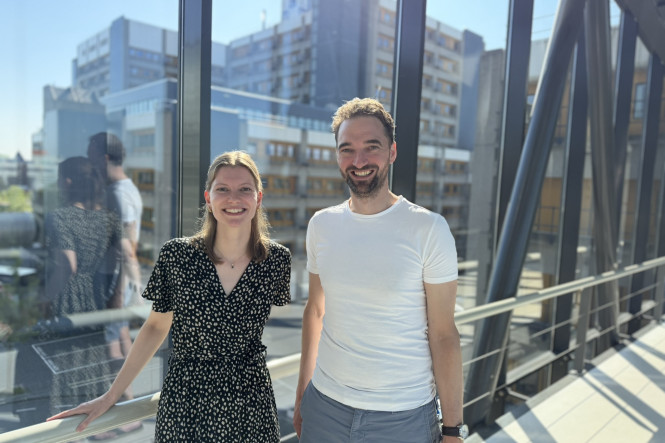
This 3 year project combines the expertise of the LUMC in translational human immunology with that of the Staten Serum Institute in the formulation of cationic liposomes as adjuvants and hamster models. At the LUMC Dr Lisa King will focus on the screening of compounds using advanced in vitro epithelial cell models, where immune cells are added. This can be used to assess how these immuno-stimulators protect cells against infection by viruses, like influenza, RSV and coronaviruses.
If certain combination of molecules can confer a broad protection, these could in the future be developed to nasal sprays that can protect vulnerable groups during the winter season or during a pandemic against many different viruses.