Using hepatocytes and immune cells isolated from healthy leftover liver resections (from surgeries), we investigate the following:
- How parasites and whole parasite vaccine candidates develop within the hepatocytes (i.e. parasite biology)
- Alterations in hepatocyte (infected and uninfected) functionality as a response to parasite exposure.
- How the infected liver cells communicate with other hepatocytes/immune cells and the resulting impact on the next round of parasite exposure
To comprehensively profile these cellular changes (host and parasite), we have established multi-fluorescence high content/confocal microscopic techniques. We are setting up high-dimensional technologies such as spectral flow cytometry, CyTOF, and single cell RNAseq to capture the dynamic interaction between host and parasite in the liver (in vitro).
Who we are
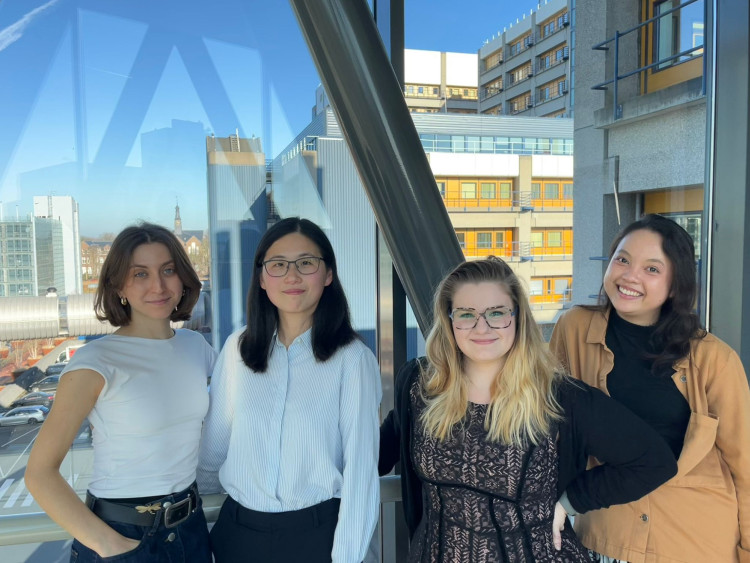
- Annie SP Yang (Senior Researcher)
- Lili A Zigo (Technician)
- Eva Iliopoulou (PhD candidate)
- Rebecca Stephanie (PhD candidate)
- Julia Niehaus (PhD candidate - absent)
Collaborators within LUMC
- Department of Surgery: Dr Stijn van Laarhoven, Dr Sven Mieog and Dr Henk Hartgrink
- Department of Gastroenterology: Professor Minneke Coenraad and Dr Maarten Tushuizen
- Department of Transplantation: Associate Professor Marten Engelse and Dr Jason Doppenberg
- Within LUCID:
- Assistant Professor Rajogopal Murugan (Antibodies and B cells)
- Dr Emma Houlder (Schistosoma interaction with liver cells)
- Associate Professor Blandine Franke-Fayard (Genetic manipulation of malaria parasites)
- Professor Meta Roestenberg and Dr. Marie-Astrid Hoogerwerf (Clinical)
- Dr Bruno Guigas (Systemic immunometabolism)